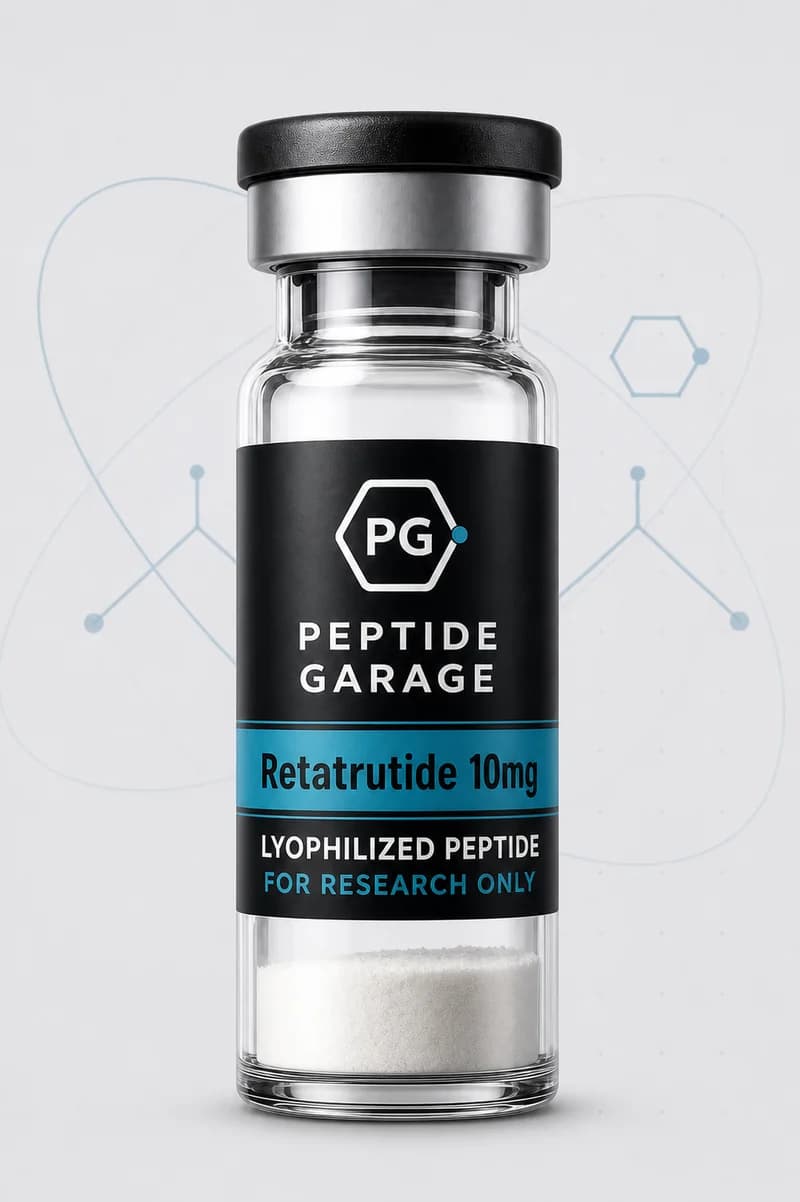
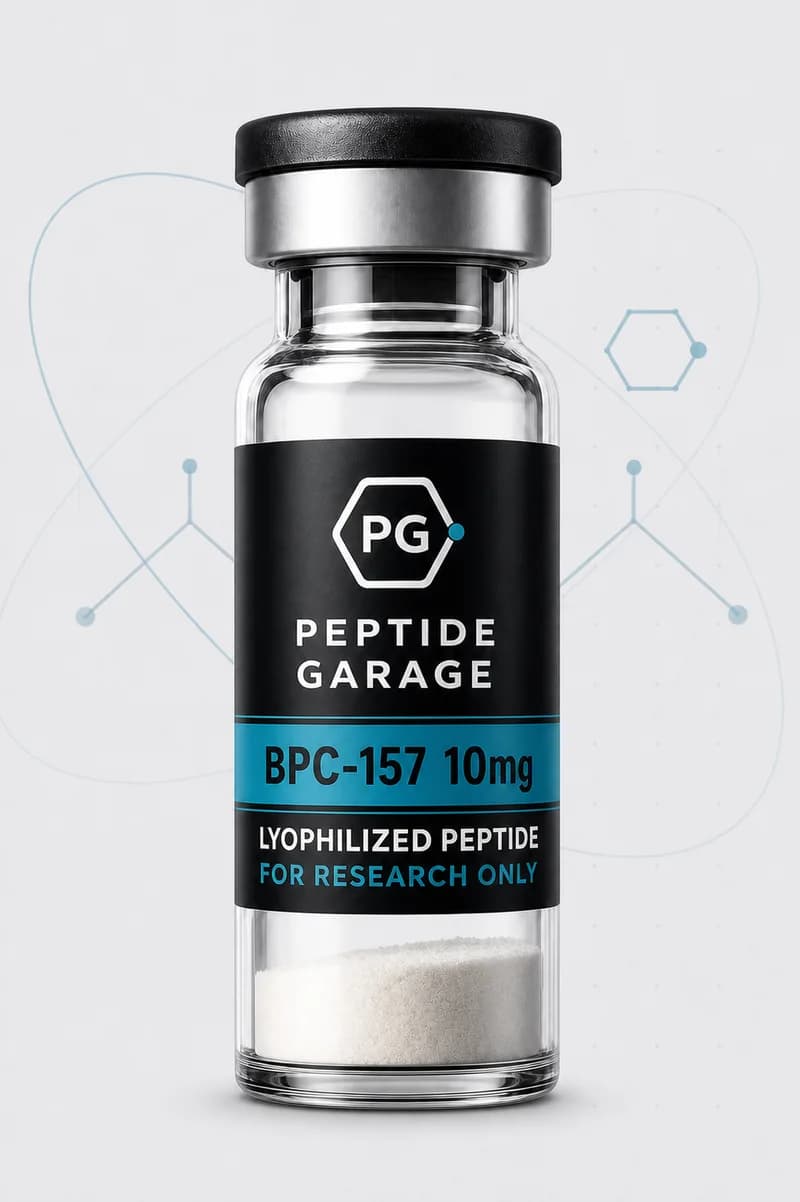
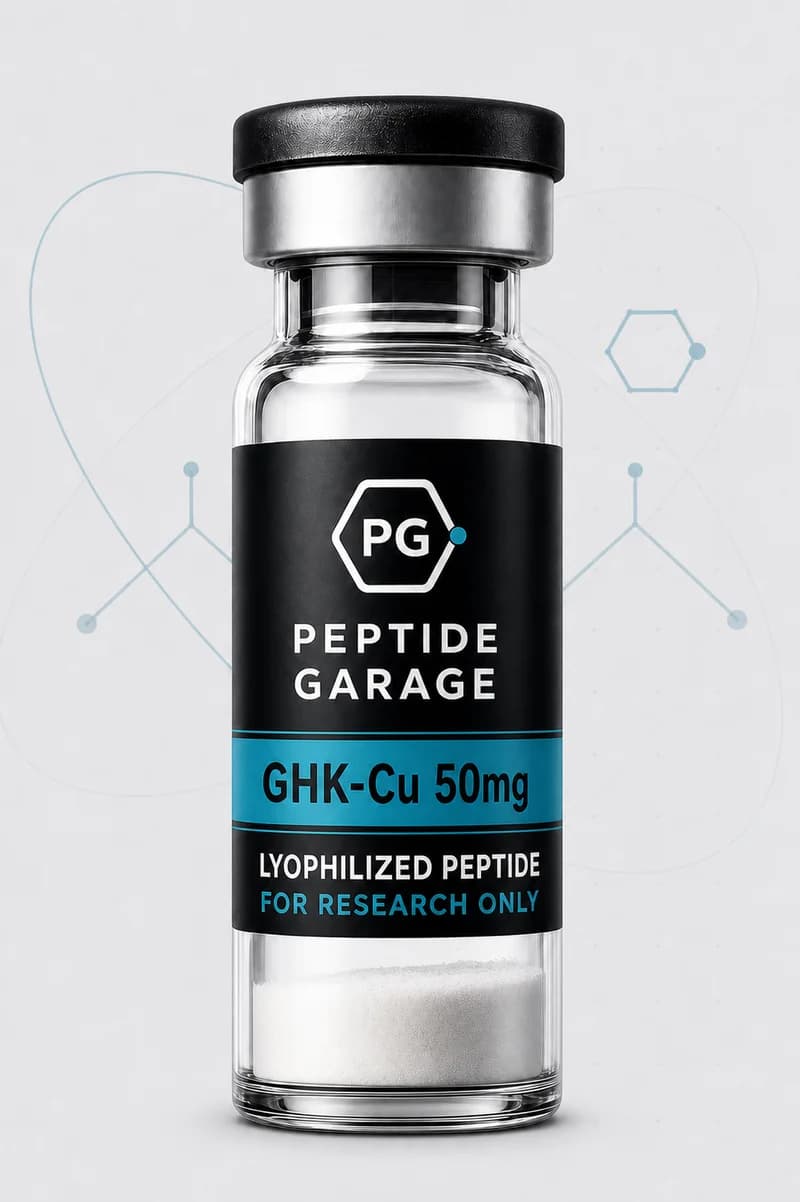
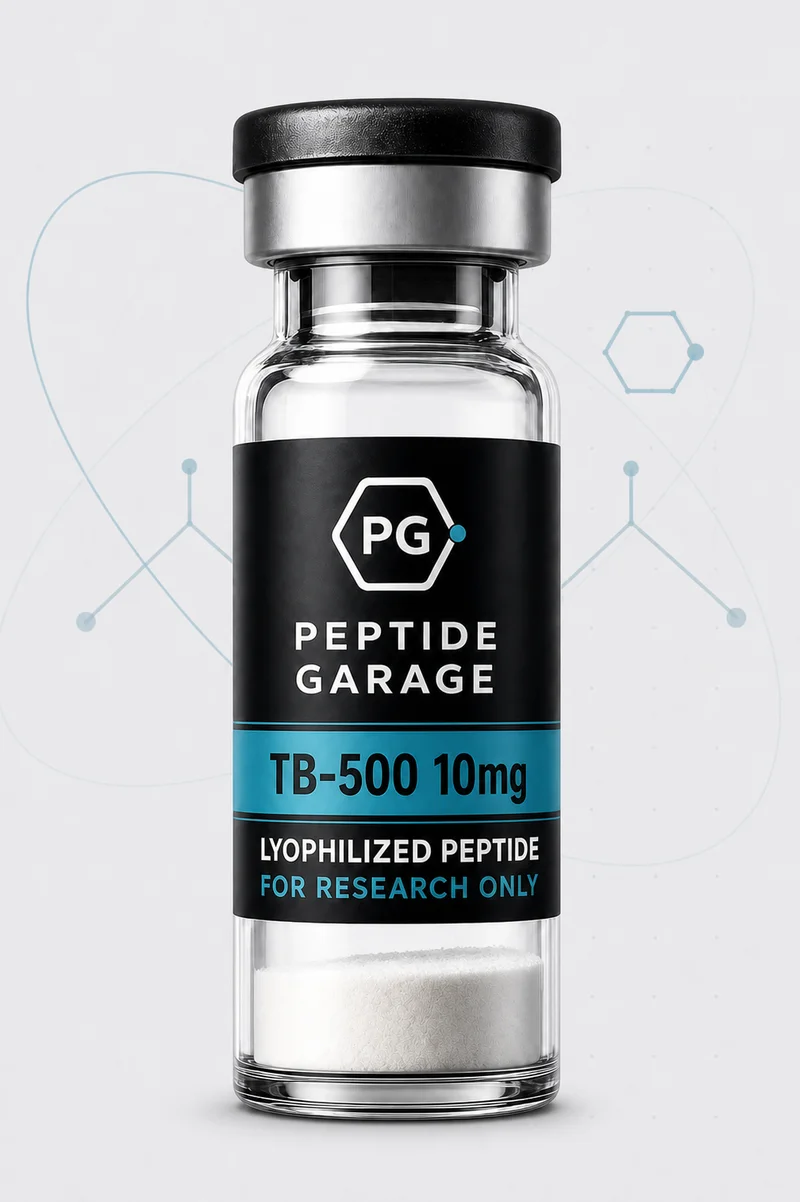
What research peptides are, how we prove quality with third-party COAs, reconstitution basics, and where to start — the ground floor of the Learn library.
A peptide is a short chain of amino acids — the same building blocks that make up proteins, just fewer of them. Where a protein might run hundreds of amino acids long, a peptide is typically only a handful. "Peptide" is a structural class, not a claim about what a molecule does. This primer covers what these compounds are, how quality is documented, how they're handled in a laboratory setting, and where to start reading.
What a research peptide is
In biological systems, peptides act as signaling molecules: a given sequence binds to a specific receptor and passes along instructions, nudging an existing process rather than creating a new one. Because each sequence is so specific, different peptides end up studied in very different research contexts — tissue repair, metabolic research, cognitive and stress research, and more. That specificity is exactly why researchers care which compound, which sequence, and which batch they are working with. Nothing here describes a use in people or animals; it is a description of chemistry.
How quality is proven
In a market where claims are easy to make and hard to verify, documentation is what separates a research-grade compound from a guess in a vial. Every batch is sent to an independent third-party lab — Janoshik Analytical or Vanguard Laboratory — and analyzed by mass spectrometry to confirm the compound's identity, and by HPLC to measure purity. The result is a Certificate of Analysis (COA) tied to a specific lot number, not a blanket marketing line. Our intent across the catalogue is 99%+ purity, and the figure shown is always the one measured for that batch; those certificates are posted with the batch number included so the numbers can be checked before you inquire.
Reconstitution basics
Most research peptides ship lyophilized — freeze-dried to a dry powder for stability during storage and transport. Before use in a laboratory setting they are reconstituted: dissolved in a sterile diluent to bring the compound back into solution. How much diluent is added sets the resulting concentration. Like the compounds themselves, peptides in solution are temperature-sensitive, so handling and cold storage matter throughout the process — this is a description of laboratory technique, not instructions for use in a person or animal.
Where to start
If you're just getting oriented, it's usually easiest to start with well-characterized, foundational compounds — the ones with the most published research and the clearest handling notes — before moving to anything niche or complex. Read the COA for the specific batch, browse the shop by research category, and check the lab results page for the underlying certificates before you form a view on any compound.
For research use only. Not for human or veterinary use. This article is educational and describes chemistry and analytical practice; it makes no health, therapeutic, or efficacy claims.
FOR LABORATORY RESEARCH USE ONLY — NOT FOR HUMAN OR VETERINARY USE. This content is educational and summarizes research literature; it is not medical advice or a product claim.